
You never forget your first love… or your first visit to the dentist! Building a good relationship from an early age with the doctor who looks after our smile is therefore essential. But how do you recognise a good paediatric dentist? What are the key qualities of the perfect dentist for children?
Our smile is our calling card, and to keep it healthy and in perfect condition into adulthood it is wise to start caring for it from the very first years of life, with regular check-ups and by learning all the secrets of good oral hygiene, which only a dentist can teach to young children.
The dentist, however, is often a figure adults fear, let alone little ones! Forceps, dental drills and syringes on full display certainly do not help young patients feel calm. Choosing your child’s dentist carefully is therefore essential if we do not want every appointment to turn into a Greek tragedy! But how do you find your way, and what should you expect during the first visit from a professional experienced in children’s dentistry and paediatric dentistry?
The first thing to assess is how the doctor approaches the child. From the very first conversation, a paediatric dentist must be able to engage the young patient, putting them at ease and making them feel safe. A good professional knows how to reassure young patients and how to help parents manage the child’s relationship with the hygiene of their little teeth. Their job is not only to look after children’s teeth, but also to help them understand the importance of dental hygiene at each stage of growth.
During the appointment, the doctor should be calm and patient, helping the child through any difficult moments by distracting them with little games and pastimes, such as counting their teeth together, letting them hold one of the instruments, or telling them stories. Having a parent present can sometimes help, but it is not always advisable, because some children become more agitated when mum or dad is in the room.
The dentist’s training is fundamental: following a child’s growth and the correct development of their dental arches is very different from caring for an adult patient. In the first years of life, as soon as the baby teeth appear, it is essential to teach the child good oral hygiene and to treat any tooth decay: consider that 22% of children under 4 have at least one cavity which, if neglected, can damage the permanent teeth.
When the permanent teeth come through, it is essential to monitor their growth and to intervene in case of problems with alignment and occlusion (the way the upper and lower teeth fit together and how they relate to the bones of the face). Malocclusion causes not only aesthetic but also functional problems, and it can affect posture and the movement of other parts of the body. A good paediatric dentist will therefore work with other professionals, such as posturologists, speech therapists and osteopaths, in the cases that require it.
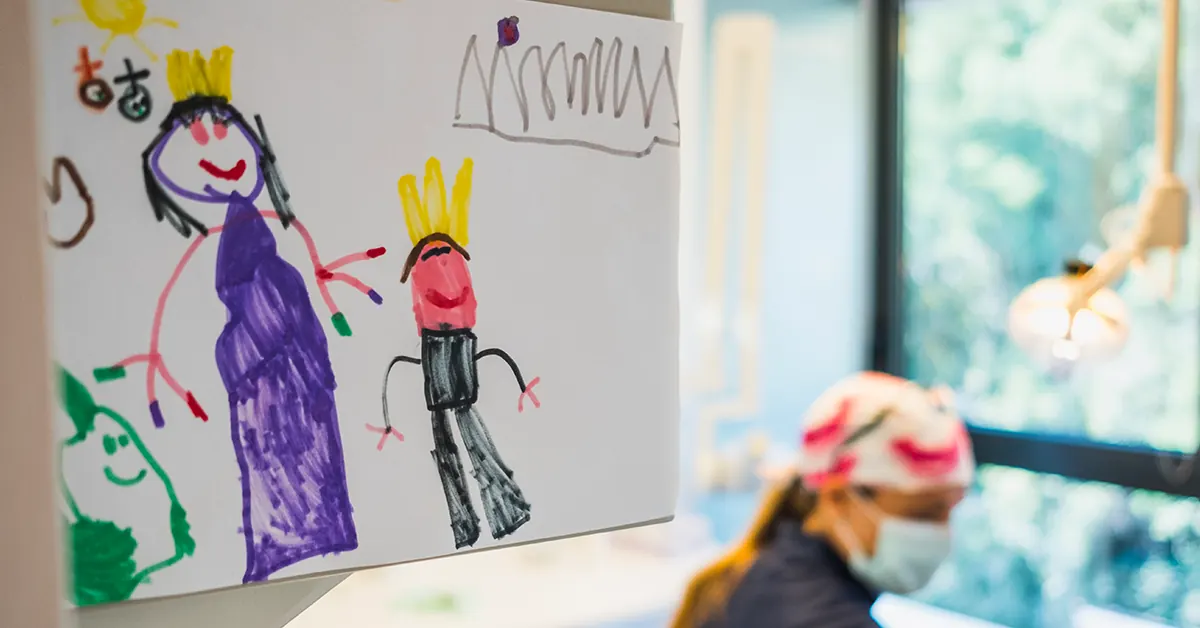
Last but not least, the setting matters too. Anyone who works with young children needs to create an environment that is as welcoming, reassuring and colourful as possible, so that patients feel at ease. The equipment and techniques used by the clinic also make a difference. Today, technology has fully entered dental practices too, with less invasive instruments and methods that are ideal for treating younger and more anxious patients.
COBE Dental in Casalecchio di Reno is the ideal choice for families with children. It is made up of an international team of highly experienced and sensitive professionals who can care for the youngest patients, accompanying them as they grow and helping them keep their smile into adulthood and later life, thanks to outstanding training gained at the prestigious university in Boston (USA) and continuous updating of both dental techniques and equipment.